Today's Scenario
Today the world is rushing towards modernization and computerization whether it is in professional, industrial, social, defense or occupational field. Commuters help in working faster without errors and a lot of data can be stored in a small space. Software industries and Technology giants want highly qualified and intelligent people at their workplace. So that they can develop the best services or products by hiring intelligent people.The technology-driven era has a plethora of options for those who have excellent coding skills and are interested in learning new languages and finding solutions to problems through computer programming.
Today the world is rushing towards modernization and computerization whether it is in professional, industrial, social, defense or occupational field. Commuters help in working faster without errors and a lot of data can be stored in a small space. Software industries and Technology giants want highly qualified and intelligent people at their workplace. So that they can develop the best services or products by hiring intelligent people.The technology-driven era has a plethora of options for those who have excellent coding skills and are interested in learning new languages and finding solutions to problems through computer programming.
Market Trend
Computer science has contributed a lot for making the life of human being smooth. The recent developments in the field of computer science are proven to be more smarter and more applicable structures result from marrying the learning capability of the applications with the transparency and accuracy. With the advent of the modern technological age, people and surrounded things get connected with each other. For protecting those connections, there is a great need for the students of Computer Science Engineering to protect the security of these connections.
Change is the only constant. This applies to your professional life as well. Up-skilling yourself is a need nowadays, the reason is pretty simple, technology is evolving very quickly. Following are the new areas of work for Computer Science Students.
1. Artificial Intelligence (AI)
2. Machine Learning (ML)
3. Internet of Things (IOT)
4. 5G (Mobile Network)
5. Block Chain
6. Cyber Security
7. Voice Technology
8. Edge Computing
9. Virtual Reality
10.Robotic Process Automation
Computer science has contributed a lot for making the life of human being smooth. The recent developments in the field of computer science are proven to be more smarter and more applicable structures result from marrying the learning capability of the applications with the transparency and accuracy. With the advent of the modern technological age, people and surrounded things get connected with each other. For protecting those connections, there is a great need for the students of Computer Science Engineering to protect the security of these connections.
Change is the only constant. This applies to your professional life as well. Up-skilling yourself is a need nowadays, the reason is pretty simple, technology is evolving very quickly. Following are the new areas of work for Computer Science Students.
1. Artificial Intelligence (AI)
2. Machine Learning (ML)
3. Internet of Things (IOT)
4. 5G (Mobile Network)
5. Block Chain
6. Cyber Security
7. Voice Technology
8. Edge Computing
9. Virtual Reality
10.Robotic Process Automation
How ITS Engineering College Gives Training To Computer Science Students
Top companies are scrambling to recruit technology savvy engineering graduates. ITS Engineering College gives its computer softwares students an edge over other college students in the competitive tech based market.
First Step is To Give Clarity Of New Computer Technologies
Before introducing any new technology topic to students be it Artificial Intelligence, Machine learning or any computer based learning technologies the faculty first clears that what are the learning goals, and provides explicit criteria on how students can be successful. It's ideal to also present models or examples to students so they can see what the end product looks like.
Networking Opportunities
As there is a lot of evolution of new technologies, every student at ITS is free to connect with other students, faculties or even internet to understand new technologies and have access to latest updates regaring IT Industry. Most ITS Students who choose connection based learning tend to have more access to information regarding new technologies.
Increased Faculty Student Interaction
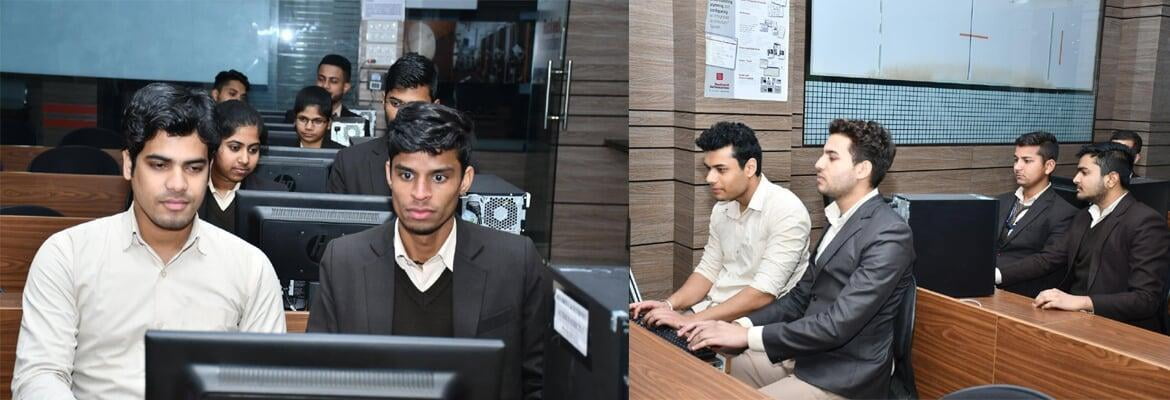
To get better understanding of new computer driven technologies Faculty at ITS are always available on all modes of new generation communications. We at ITS prefer to give quality time to students so that the student can understand and the more the student interacts with the faculty or other students about a concept, the more will be the effect of learning. This increases the chances of a student performing well due to the time their faculty give them. This also enhances their problem-solving and communication skills, as well as knowing how to defend their arguments to superiors if needed.
Industry Oriented Labs - Center Of Excellence
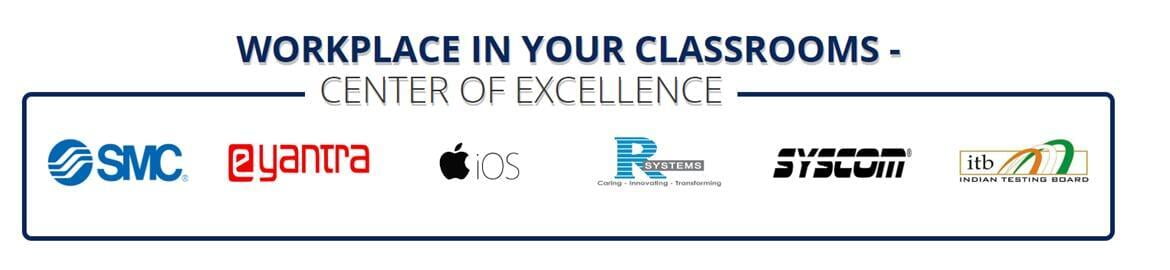
ITS Engineering College has setup industry oriented computer labs for its computer science students to get project based exposure. These Industry simulated environments are giving exposure to students to the latest cutting edge technologies in Industry. Also, the students are having access to an online learning platform for unique set of Industry oriented engineering course modules. We have separate labs for our computer students specially setup ed to learn new technologies in the area of computer science. Apple IOs Programming Lab, Syscom Lab, R Systems lab and ITB & SALT software testing labs are setup ed in the ITS Engineering College Premises.
Project Based Assessments
Projects can be defined as a planned undertaking to accomplish a specific aim, and have been a valuable part of learning for a long time. We at ITS focus more on practical and Project Based Learning. The Computer Technology learning area has the most synergy with a project based learning approach. The inquiry and design processes that are central to project-based learning are also central to the Technology learning area. As such, Technology provides a structure to explore knowledge and issues in other learning areas. Software programming, debugging, software testing, Dev Ops, JAVA, C#, Python ect are some of the programming languages which are more focused on projects.
Access to Expertise Online
Specially designed for computer science engineers allows the sharing of expertise that helps more students have access to education that is not readily available over the internet. The whole premises of ITS Engineering College is enabled with High Speed Internet wifi for students to access information while and after their college sessions.
Top companies are scrambling to recruit technology savvy engineering graduates. ITS Engineering College gives its computer softwares students an edge over other college students in the competitive tech based market.
First Step is To Give Clarity Of New Computer Technologies
Before introducing any new technology topic to students be it Artificial Intelligence, Machine learning or any computer based learning technologies the faculty first clears that what are the learning goals, and provides explicit criteria on how students can be successful. It's ideal to also present models or examples to students so they can see what the end product looks like.
Networking Opportunities
As there is a lot of evolution of new technologies, every student at ITS is free to connect with other students, faculties or even internet to understand new technologies and have access to latest updates regaring IT Industry. Most ITS Students who choose connection based learning tend to have more access to information regarding new technologies.
Increased Faculty Student Interaction
To get better understanding of new computer driven technologies Faculty at ITS are always available on all modes of new generation communications. We at ITS prefer to give quality time to students so that the student can understand and the more the student interacts with the faculty or other students about a concept, the more will be the effect of learning. This increases the chances of a student performing well due to the time their faculty give them. This also enhances their problem-solving and communication skills, as well as knowing how to defend their arguments to superiors if needed.
Industry Oriented Labs - Center Of Excellence
ITS Engineering College has setup industry oriented computer labs for its computer science students to get project based exposure. These Industry simulated environments are giving exposure to students to the latest cutting edge technologies in Industry. Also, the students are having access to an online learning platform for unique set of Industry oriented engineering course modules. We have separate labs for our computer students specially setup ed to learn new technologies in the area of computer science. Apple IOs Programming Lab, Syscom Lab, R Systems lab and ITB & SALT software testing labs are setup ed in the ITS Engineering College Premises.
Project Based Assessments
Projects can be defined as a planned undertaking to accomplish a specific aim, and have been a valuable part of learning for a long time. We at ITS focus more on practical and Project Based Learning. The Computer Technology learning area has the most synergy with a project based learning approach. The inquiry and design processes that are central to project-based learning are also central to the Technology learning area. As such, Technology provides a structure to explore knowledge and issues in other learning areas. Software programming, debugging, software testing, Dev Ops, JAVA, C#, Python ect are some of the programming languages which are more focused on projects.
Access to Expertise Online
Specially designed for computer science engineers allows the sharing of expertise that helps more students have access to education that is not readily available over the internet. The whole premises of ITS Engineering College is enabled with High Speed Internet wifi for students to access information while and after their college sessions.